FACT-CHECK: Viral DGSN Communiqué on New Identity Card System Is Fake
- Uncategorized
admin
- 0
- 10 minutes read
By Rita Yuosembom
The Claim
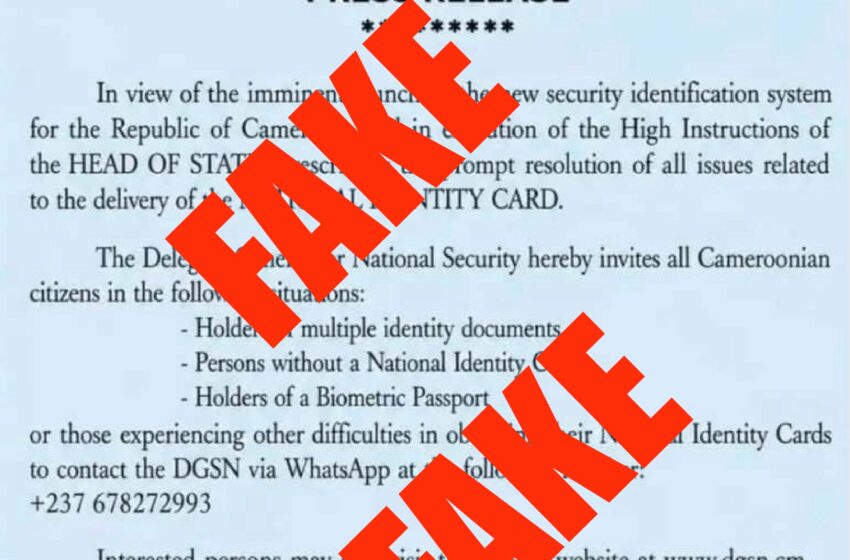
A communiqué dated 14 May 2026, attributed to the General Delegation for National Security (DGSN) and purportedly signed by Delegate General Martin Mbarga Nguele, has been circulating widely on social media.
The document, which has been shared numerous times in WhatsApp chat groups, announces the supposed launch of a new national security identification system and directs citizens with identity-document concerns to contact a WhatsApp number for assistance.
Verdict: FALSE
The document is not an authentic DGSN communiqué.
The Verification
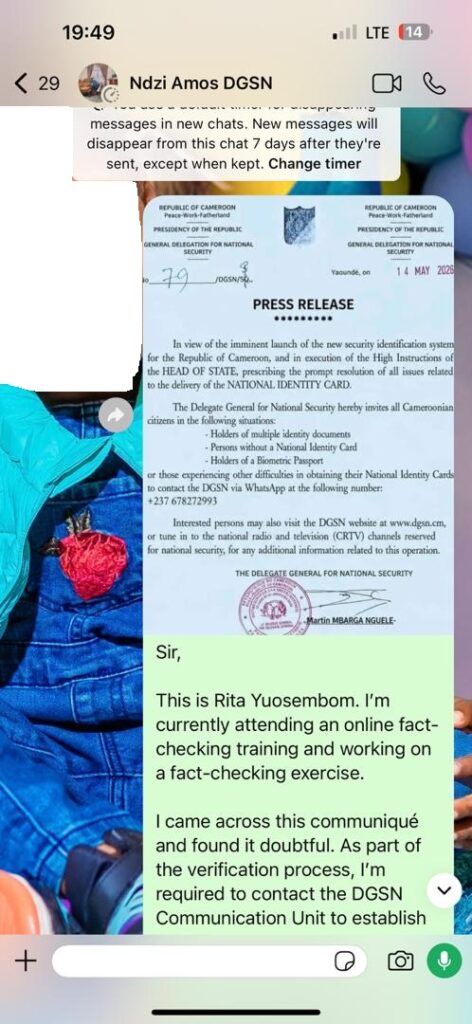
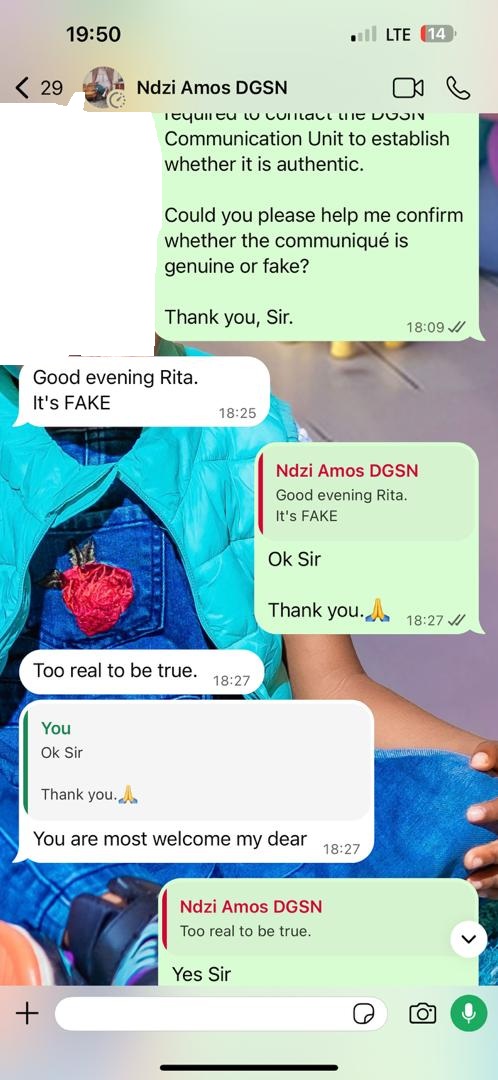
The first step was to contact the DGSN directly. A senior police superintendent attached to the DGSN Communication Service, Ndzi Amos Tarla, was sent the document and confirmed that it did not originate from the institution.
A review of the DGSN’s official website also found no publication corresponding to the alleged announcement.
Further scrutiny of the document raised additional concerns. Rather than directing citizens to an identifiable institutional service, it provides a WhatsApp number, +237 678 272 993, as a point of contact for sensitive identity-document matters. Attempts to reach the number for clarification received no response.
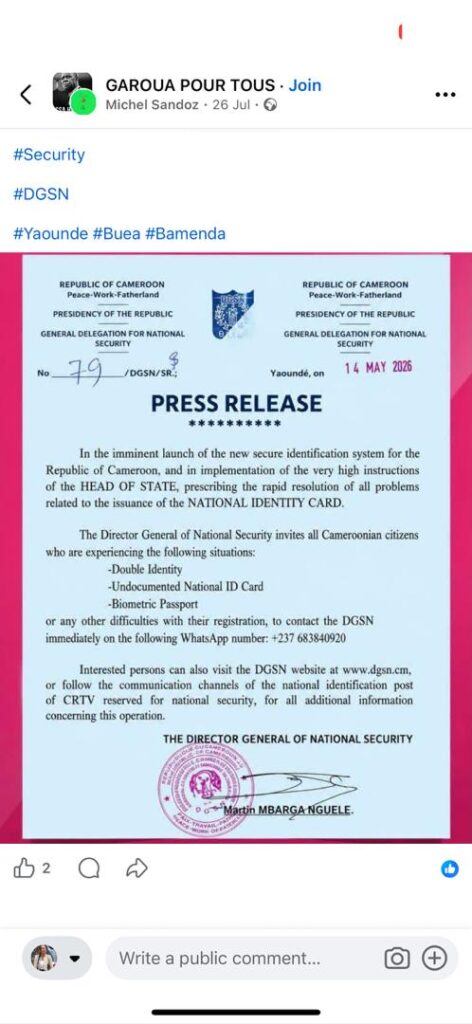
A reverse-image search provided another important lead. A later online version of the same communiqué was found under the name “Michel Sandoz”, but with a different telephone number. The Facebook post containing this version
This suggests that the document has been reproduced or recirculated rather than issued through an official DGSN channel.
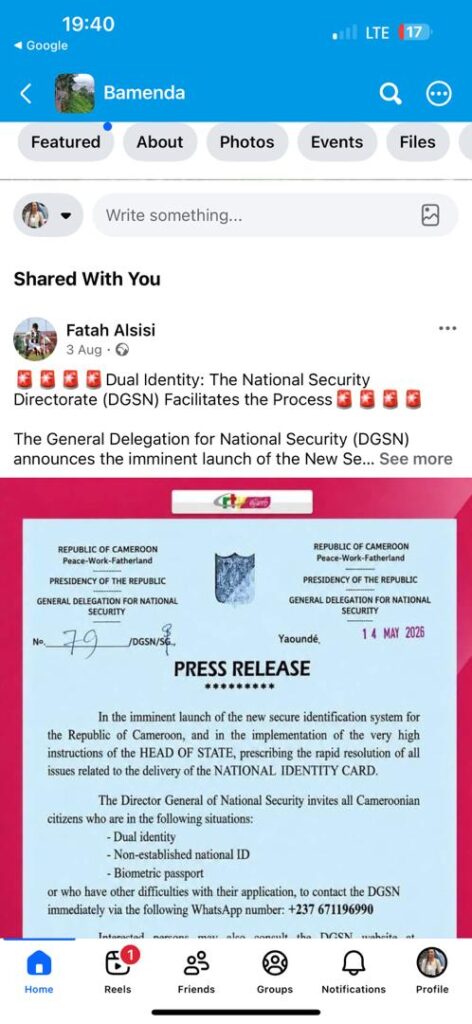
The investigation also uncovered another version posted on 3 August 2026 by an account named “Fata Alsisi” on a page identified as “Bamenda”. This version carried a CRTV Web logo, but its placement and presentation differed from the way CRTV Web normally identifies its publications.
The “Bamenda” page itself also presented characteristics that raised questions about its authenticity and its connection to any recognised news or government institution.
The discovery of multiple versions of essentially the same communiqué, circulated by different accounts and carrying different contact numbers, further undermines its credibility.
Importantly, the presence of the CRTV Web logo on one version does not establish that CRTV Web published or endorsed the document. The official CRTV website identifies CRTV as Cameroon’s public audiovisual broadcaster and provides its official news and programme platforms. (CRTV – Cameroon Radio Television)
The investigation found no independent official source corroborating the alleged new identification system described in the document.
Why the Scam Technique Is Concerning
The use of official-looking documents to obtain the public’s trust is a common feature of online scams and disinformation. Fraudulent messages may imitate the language, logos, formatting or signatures of government institutions to make false information appear credible.
According to IT experts, such techniques work by exploiting people’s trust in official institutions and creating a sense of urgency or authority. Fraudsters may then use unofficial contact details, such as personal phone or WhatsApp numbers, to move victims away from verifiable institutional channels.
In this case, the use of an unverified WhatsApp number to handle sensitive identity-document matters is particularly concerning. It creates the possibility that unsuspecting citizens could be persuaded to share personal information or copies of official documents.
Why It Matters
The false communiqué is particularly concerning because it directs citizens dealing with identity documents towards an unverified contact.
Anyone who responds could potentially expose sensitive personal information, including details contained on national identity cards or passports.
Citizens are therefore advised not to contact the number or share personal documents based on the circulating message. Information attributed to the DGSN should be verified through its official communication channels or directly with the institution.
Conclusion
The evidence establishes that the circulating document is not a genuine DGSN communiqué.
Its official-looking format does not make it authentic. The use of an unverified WhatsApp contact, the existence of several versions of the document with different contact numbers, and the absence of confirmation from official DGSN channels all point to a fabricated document.
The case highlights the importance of verifying official-looking information before sharing it or acting on it, particularly when it involves sensitive personal information.