Douala, Cameroon: Women With Disabilities Turn Plastic Waste Into Livelihoods, but Struggle for Safer and Scalable Solutions
- Uncategorized
admin
- 0
- 8 minutes read
By Rita Yuosembom
In Douala, Cameroon’s largest city and economic hub in Central Africa, rapid urban expansion has intensified one of its most persistent challenges: solid waste management. Plastic waste accumulates along streets, clogs drainage systems, and worsens seasonal flooding during heavy rains.
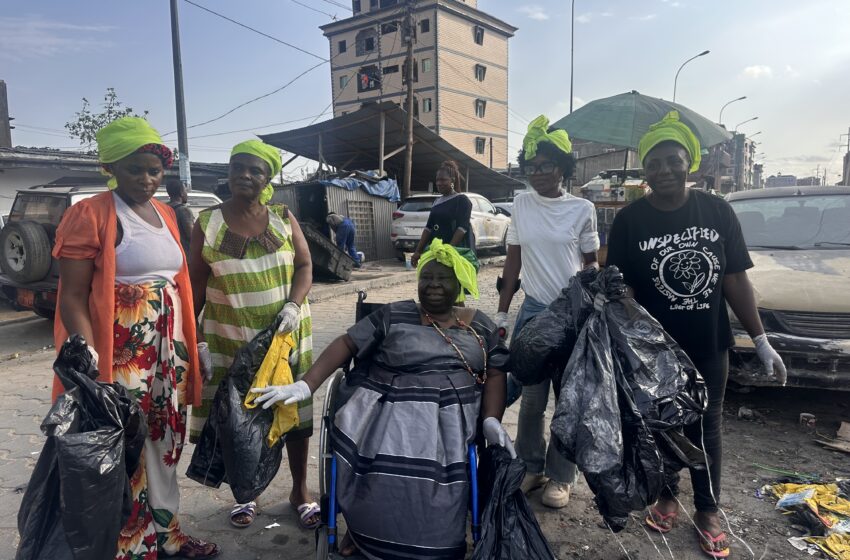
In a city where formal recycling systems remain limited, a group of women living with disabilities in the Mboppi district has developed an alternative response ,collecting discarded plastic and transforming it into handcrafted products that generate income while contributing to environmental cleanup.
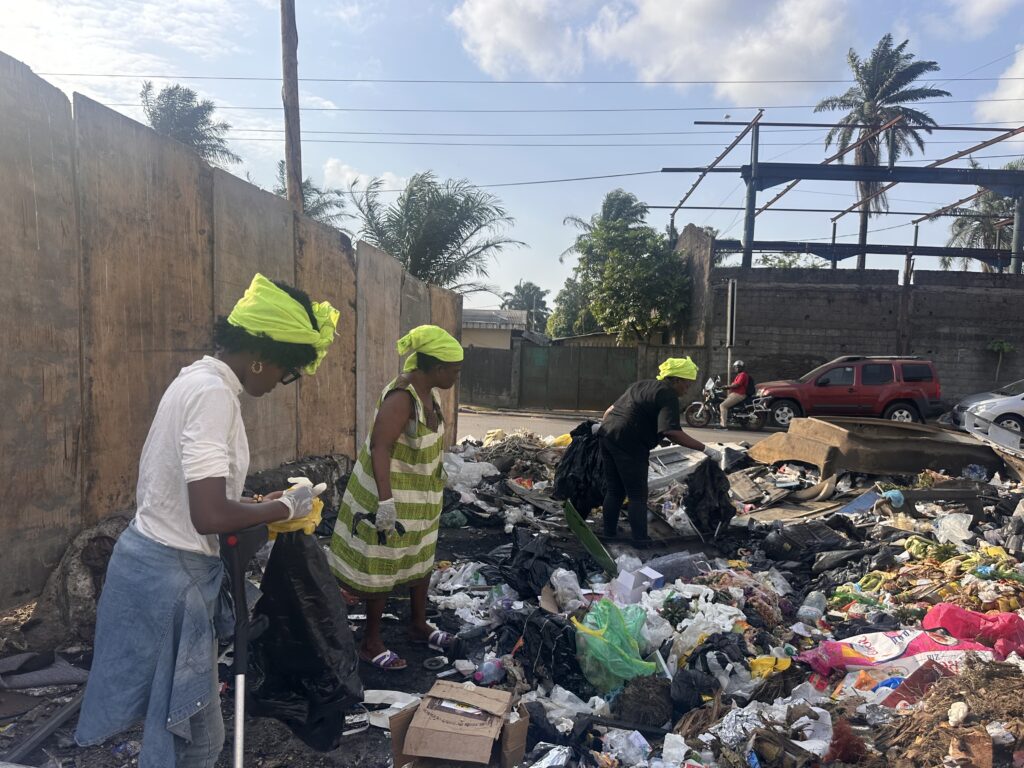
Not far from busy commercial routes in Mboppi, members of the Association of Girls and Women with Disabilities for Total Integration and Development (AFFHALITD) move through informal dumpsites in search of plastic materials. Some rely on crutches, others navigate the terrain with limited mobility, carefully sorting through mixed waste to recover usable plastic.
“We go into the bins, collect plastic, wash it, dry it, and turn it into thread for weaving,” explains Marie Louise Noubissi, the association’s president.
Back at their workshop, the collected materials are washed with detergent and disinfectant, then dried in the open air before being flattened, cut into strips, and rolled into threads used for weaving.
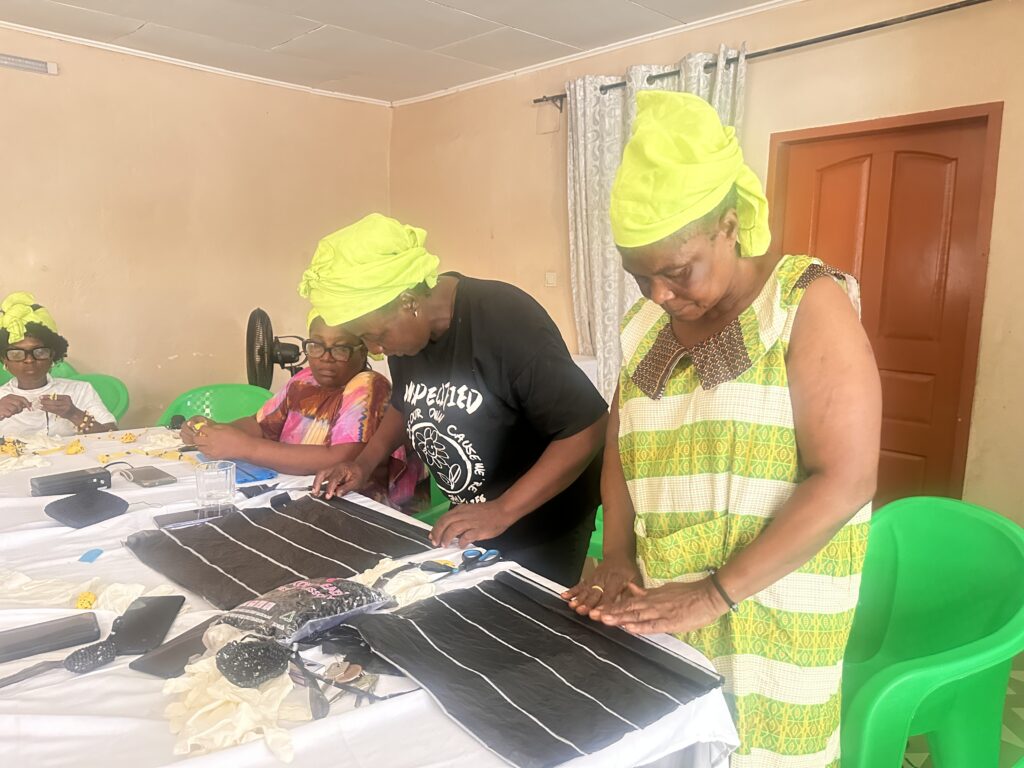
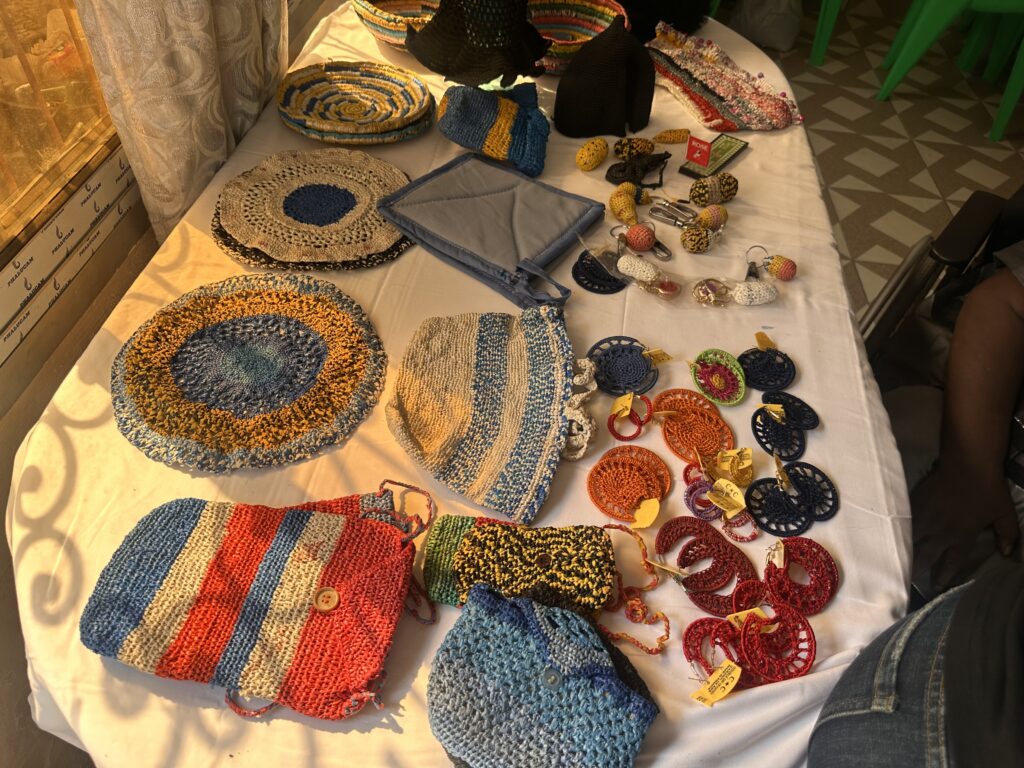
Inside the production space, women sit around a table, transforming the plastic threads into bags, hats, key holders, and decorative items.
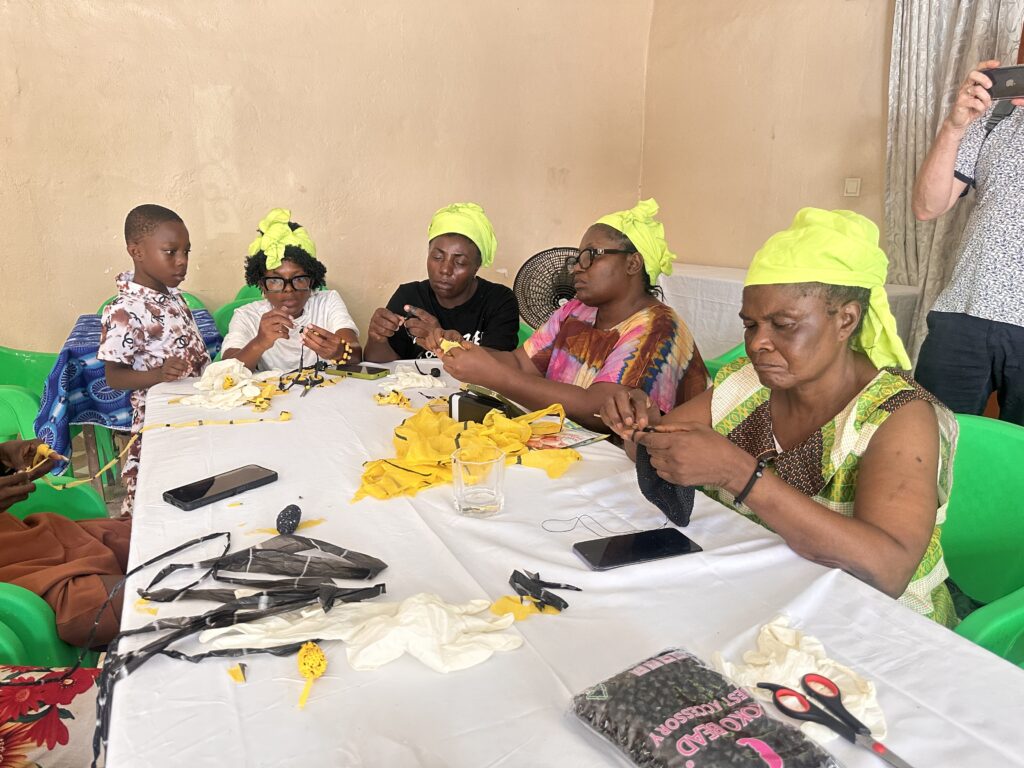
The finished products are displayed and sold at local exhibitions and trade fairs across Douala and Yaoundé, providing a modest but meaningful source of income.
For many members, AFFHALITD represents both economic opportunity and social inclusion. “I was at home doing nothing before I came here,” says Marie Madeleine Tchamguen, a recent member. “Now I’m learning a skill that helps me survive and also contributes to cleaning the environment.” Veteran member Emily Telek, who has been part of the association for over a decade, describes the activity as a source of independence. “It ensures I am not empty-handed,” she says.
At major exhibitions, some members report earnings of up to 50,000 CFA francs (about $80), depending on demand and product type. Beyond income, the initiative also contributes to reducing plastic waste in the city by diverting materials from drains and open dumping sites.
Despite these gains, the model carries significant health risks. Much of the plastic is collected directly from mixed waste, exposing the women to potentially hazardous materials. In many cases, protective equipment such as masks is either insufficient or unavailable.
Environmental specialist Jocelyne Henri-Tonant, who works on circular economy and climate finance, warns that the health implications cannot be overlooked. “The economic benefit is immediate, but it does not offset the health risks involved. In its current form, this is not a fully sustainable solution,” she notes. Experts point to exposure risks linked to toxic residues, microplastics, and unsorted waste, which may have long-term health consequences.
The initiative also reflects deeper structural gaps in Douala’s waste management system, where formal sorting and recycling infrastructure remains limited. In the absence of organised collection and processing systems, informal actors like AFFHALITD fill a critical gap ,but under conditions that remain precarious and largely unsupported.
Women in the association say their work is constrained by the lack of waste segregation at source, limited access to protective equipment, and the absence of basic mechanised tools that could reduce direct exposure to waste. Difficulties in transporting materials and accessing wider markets further limit their capacity to scale production, particularly for members living with disabilities.
“We once lost a major order because we couldn’t access the right quality of plastic,” says Noubissi.
Practitioners and experts argue that strengthening such initiatives could significantly improve both safety and impact. Cleaner supply chains, including access to pre-sorted or industrial plastic waste, would reduce exposure to hazardous materials. Simple mechanised tools for washing and processing could also limit direct contact with waste while increasing efficiency.
Training in entrepreneurship and design, alongside financial and logistical support, could help the women scale production and reach more stable markets. A transport system dedicated to collecting materials across the city would also ease the physical burden currently borne by members.
According to Henri-Tonant, repositioning the women toward the end of the value chain ,focusing on weaving and design rather than waste collection ,would significantly reduce health risks while enhancing product value.
Despite its limitations, AFFHALITD illustrates how marginalized groups can respond innovatively to urban environmental challenges when formal systems fall short.
“These women are responding to a gap in the system,” says Henri-Tonant. “The challenge is to ensure that their contribution does not come at the cost of their health.”
For Douala ,and other rapidly urbanising cities across Africa ,the experience raises a broader question of how to transition from informal resilience to structured, safe, and scalable circular economy systems.
For Douala, the question is no longer whether these women are making a difference ,they are. It is whether the city and its partners will build the systems needed so that their work can be safer, recognised, and scaled into something that matches the size of the challenge they are already helping to solve.